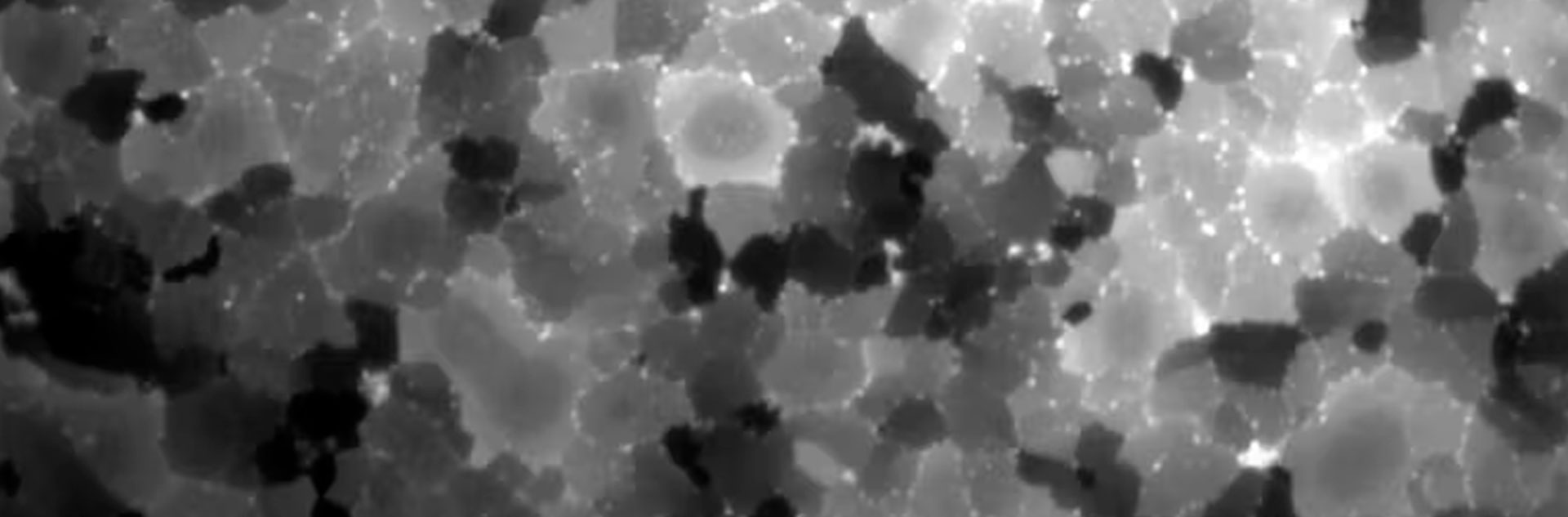






Lead halide perovskites have emerged as promising materials for solar energy conversion and X-ray detection owing to their remarkable optoelectronic properties. However, the microscopic origins of their superior performance remain unclear. Here we show that low-symmetry dynamic nanodomains present in the high-symmetry average cubic phases, whose characteristics are dictated by the A-site cation, govern the macroscopic behaviour. We combine X-ray diffuse scattering, inelastic neutron spectroscopy, hyperspectral photoluminescence microscopy and machine-learning-assisted molecular dynamics simulations to directly correlate local nanoscale dynamics with macroscopic optoelectronic response. Our approach reveals that methylammonium-based perovskites form densely packed, anisotropic dynamic nanodomains with out-of-phase octahedral tilting, whereas formamidinium-based systems develop sparse, isotropic, spherical nanodomains with in-phase tilting, even when crystallography reveals cubic symmetry on average. We demonstrate that these sparsely distributed isotropic nanodomains present in formamidinium-based systems reduce electronic dynamic disorder, resulting in a beneficial optoelectronic response, thereby enhancing the performance of formamidinium-based lead halide perovskite devices. By elucidating the influence of the A-site cation on local dynamic nanodomains, and consequently, on the macroscopic properties, we propose leveraging this relationship to engineer the optoelectronic response of these materials, propelling further advancements in perovskite-based photovoltaics, optoelectronics and X-ray imaging.
Articles scientifiques
Dynamic nanodomains dictate macroscopic properties in lead halide perovskites
Année
2025
Produits associés
Résumé
Milos Dubajic, James R. Neilson, Johan Klarbring, Xia Liang, Stephanie A. Bird, Kirrily C. Rule, Josie E. Auckett, Thomas A. Selby, Ganbaatar Tumen-Ulzii, Yang Lu, Young-Kwang Jung, Cullen Chosy, Zimu Wei, Yorrick Boeije, Martin v. Zimmermann, Andreas Pusch, Leilei Gu, Xuguang Jia, Qiyuan Wu, Julia C. Trowbridge, Eve M. Mozur, Arianna Minelli, Nikolaj Roth, Kieran W. P. Orr, Arman Mahboubi Soufiani, Simon Kahmann, Irina Kabakova, Jianning Ding, Tom Wu, Gavin J. Conibeer, Stephen P. Bremner, Michael P. Nielsen, Aron Walsh, Samuel D. Stranks
Produits associés
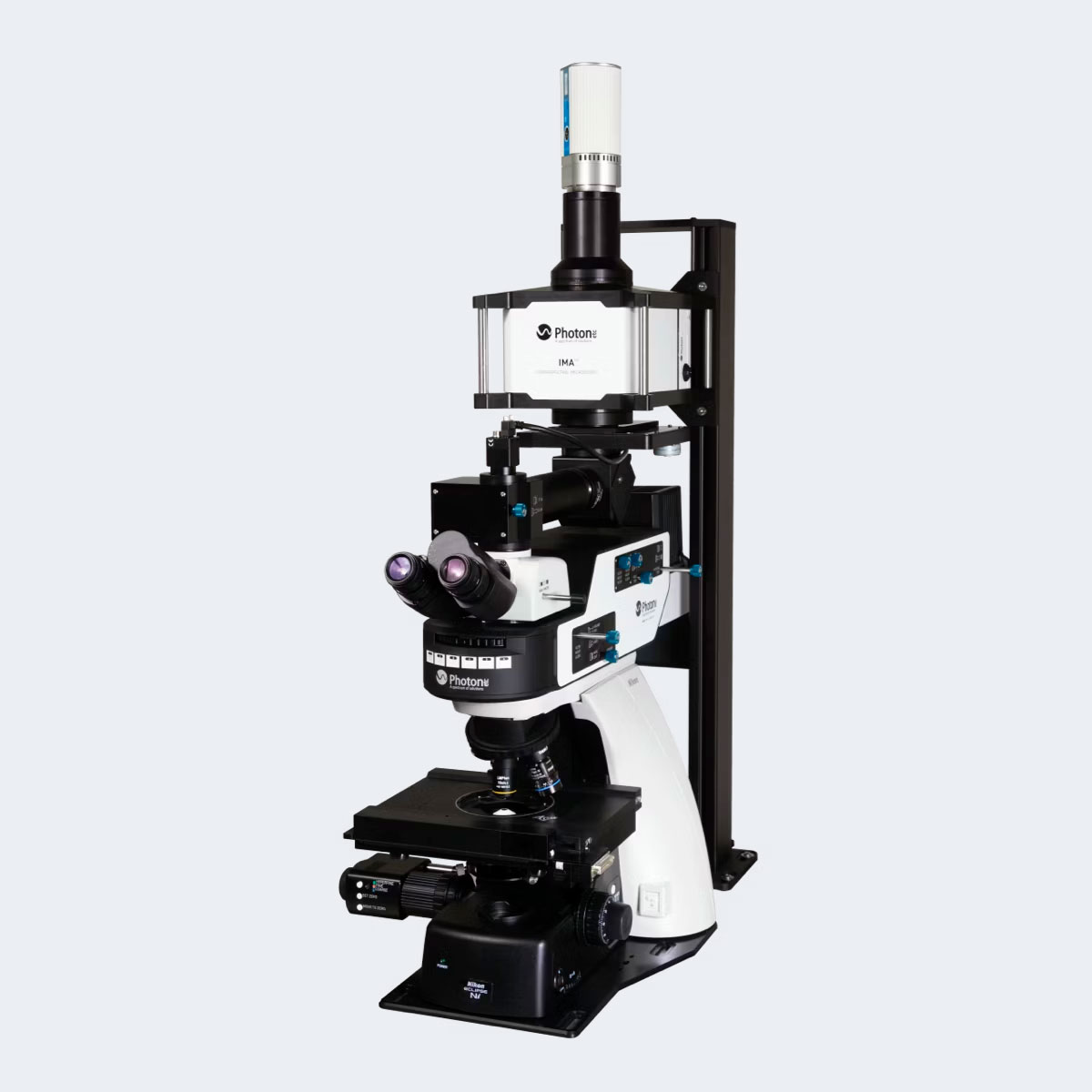
IMA™
IMA est une plateforme de microscopie hyperspectrale qui fournit de l’information spatiale et spectrale dans...