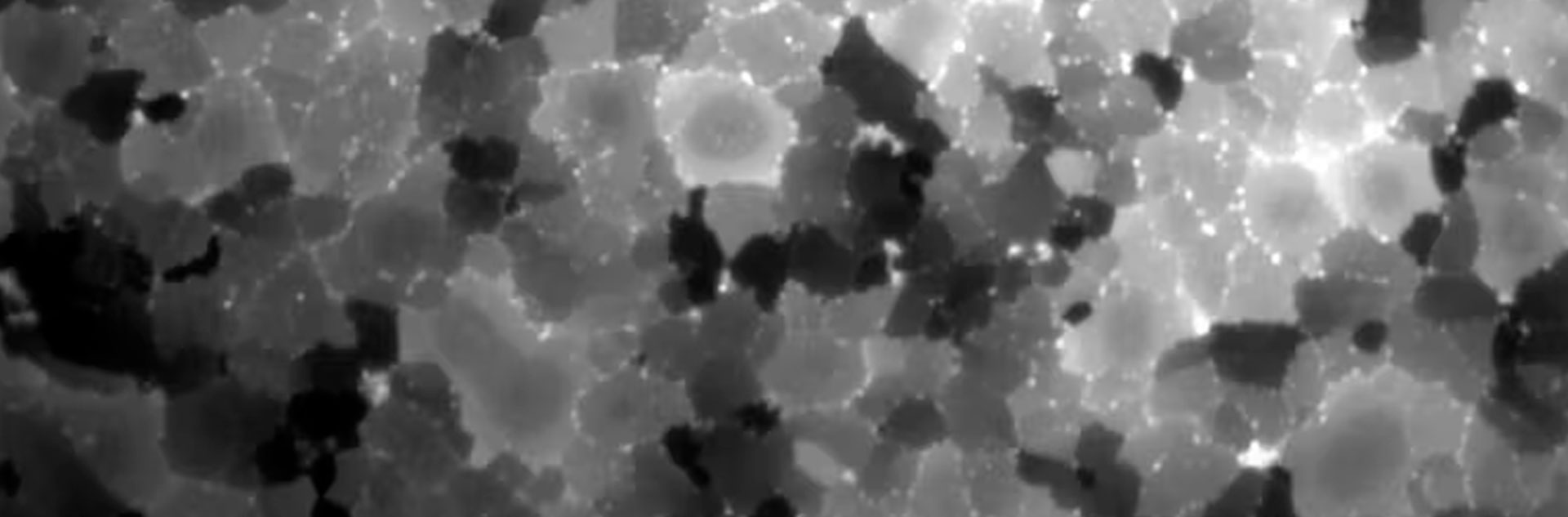



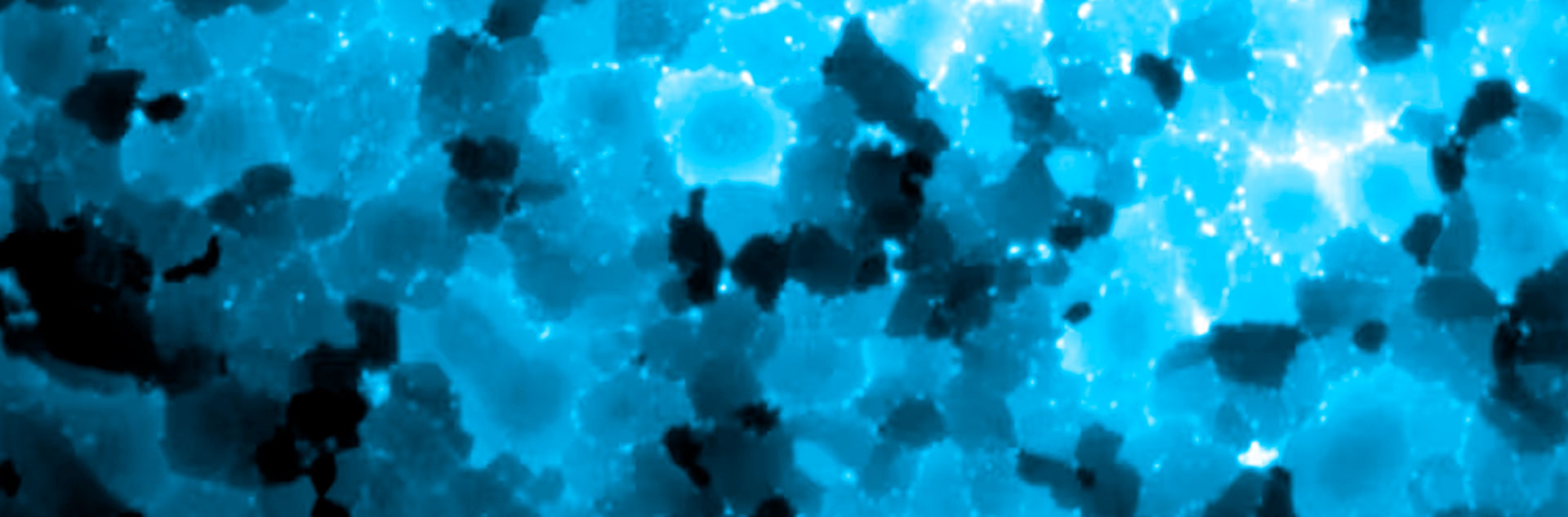

Here we use time-resolved and steady-state optical spectroscopy on state-of-the-art low- and high-bandgap perovskite films for tandems to quantify intrinsic recombination rates and absorption coefficients. We apply these data to calculate the limiting efficiency of perovskite-silicon and all-perovskite two-terminal tandems employing currently available bandgap materials as 42.0 % and 40.8 % respectively. By including luminescence coupling between sub-cells, i.e. the re-emission of photons from the high-bandgap sub-cell and their absorption in the low-bandgap sub-cell, we reveal the stringent need for current matching is relaxed when the high-bandgap sub-cell is a luminescent perovskite compared to calculations that do not consider luminescence coupling. We show luminescence coupling becomes important in all-perovskite tandems when charge carrier trapping rates are < 106 s-1 (corresponding to carrier lifetimes longer than 1 μs at low excitation densities) in the high-bandgap sub-cell, which is lowered to 105 s-1 in the better-bandgap-matched perovskite-silicon cells. We demonstrate luminescence coupling endows greater flexibility in both sub-cell thicknesses, increased tolerance to different spectral conditions and a reduction in the total thickness of light-absorbing layers. To maximally exploit luminescence coupling we reveal a key design rule for luminescent perovskite-based tandems: the high-bandgap sub-cell should always have the higher short-circuit current. Importantly, this can be achieved by reducing the bandgap or increasing the thickness in the high-bandgap sub-cell with minimal reduction in efficiency, thus allowing for wider, unstable bandgap compositions (>1.7 eV) to be avoided. Finally, we experimentally visualize luminescence coupling in an all-perovskite tandem device stack through cross-section luminescence images.
Articles scientifiques
Relaxed Current Matching Requirements in Highly Luminescent Perovskite Tandem Solar Cells and Their Fundamental Efficiency Limits
Année
2020
Produits associés
Résumé
Alan R. Bowman, Felix Lang, Yu-Hsien Chiang, Alberto Jiménez-Solano, Kyle Frohna, Giles E. Eperon, Edoardo Ruggeri, Mojtaba Abdi-Jalebi, Miguel Anaya, Bettina V. Lotsch, and Samuel D. Stranks
Produits associés
IMA™
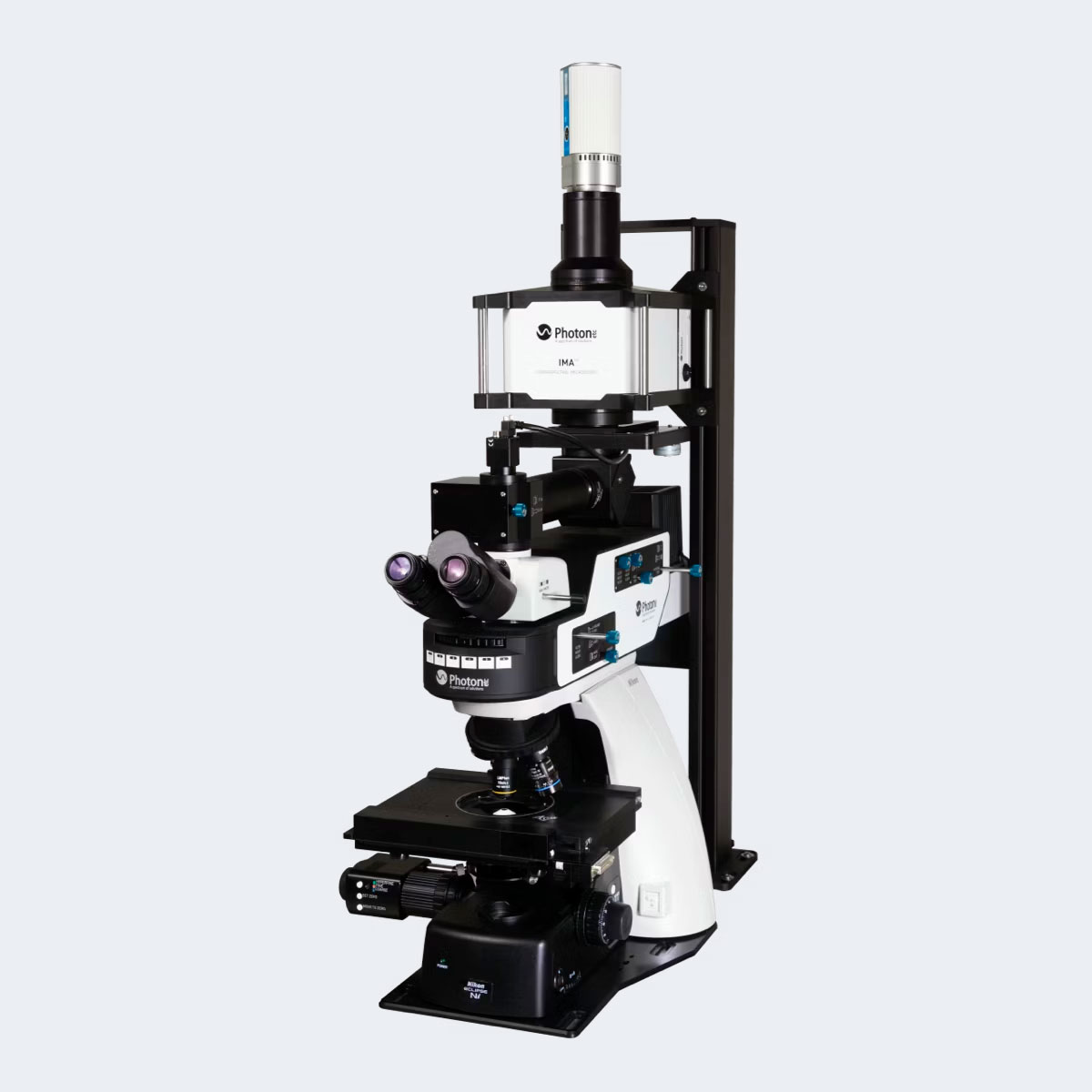
IMA est une plateforme de microscopie hyperspectrale qui fournit de l’information spatiale et spectrale dans...