



Front transparent conductive oxides (TCOs) that combine high conductivity with broadband transparency are essential to minimize resistive and optical losses in perovskite/silicon tandem solar cells. While indium zinc oxide (IZO) is a commonly used front electrode, its amorphous nature leads to undesired absorption losses near the band edge, thereby constraining the tandem current. Here, we explore the use of crystalline Zr-doped indium oxide (IZrO), featuring a higher transparency at its band edge, to replace IZO as the front electrode. Full crystallization of IZrO requires postannealing at temperatures >190 °C, which raises concerns around its compatibility with typically employed charge transport layers and the perovskite layer itself. Our work reveals that hole- and electron-selective contacts (NiOx/MeO-2PACz and C60/SnO2, respectively) as used in our tandems endure such temperatures. Conversely, the wide bandgap CsFAMAPbIxBr3–x perovskite composition, deposited by solution and sequential hybrid processes, degrades upon high-temperature annealing. Notably, we identified substantial differences between the solution- and hybrid-processed perovskites through comprehensive analysis, where the latter exhibited higher temperature resilience. As a result, only hybrid-processed perovskite/silicon tandem devices partially retained their initial power conversion efficiency after high-temperature annealing. Our work underlines the urgency to develop high-temperature-resilient perovskites to advance perovskite/silicon tandem photovoltaics to their full performance potential, and, arguably, to improve their overall reliability under thermal stress.
Articles scientifiques
Temperature-Resilient Monolithic Perovskite/Silicon Tandems Enabling Crystalline Front TCO Integration
Année
2025
Produits associés
Résumé
Ahmed Ali Said, Lorenzo Mardegan, Esma Ugur, Zhaoning Song, Pia Dally, Bumin Yildirim, Drajad S. Utomo, Arsalan Razzaq, Deniz Turkay, Christian M. Wolff, Monica Morales-Masis, Yanfa Yan, Henk J. Bolink, Erkan Aydin, Stefaan De Wolf
Produits associés
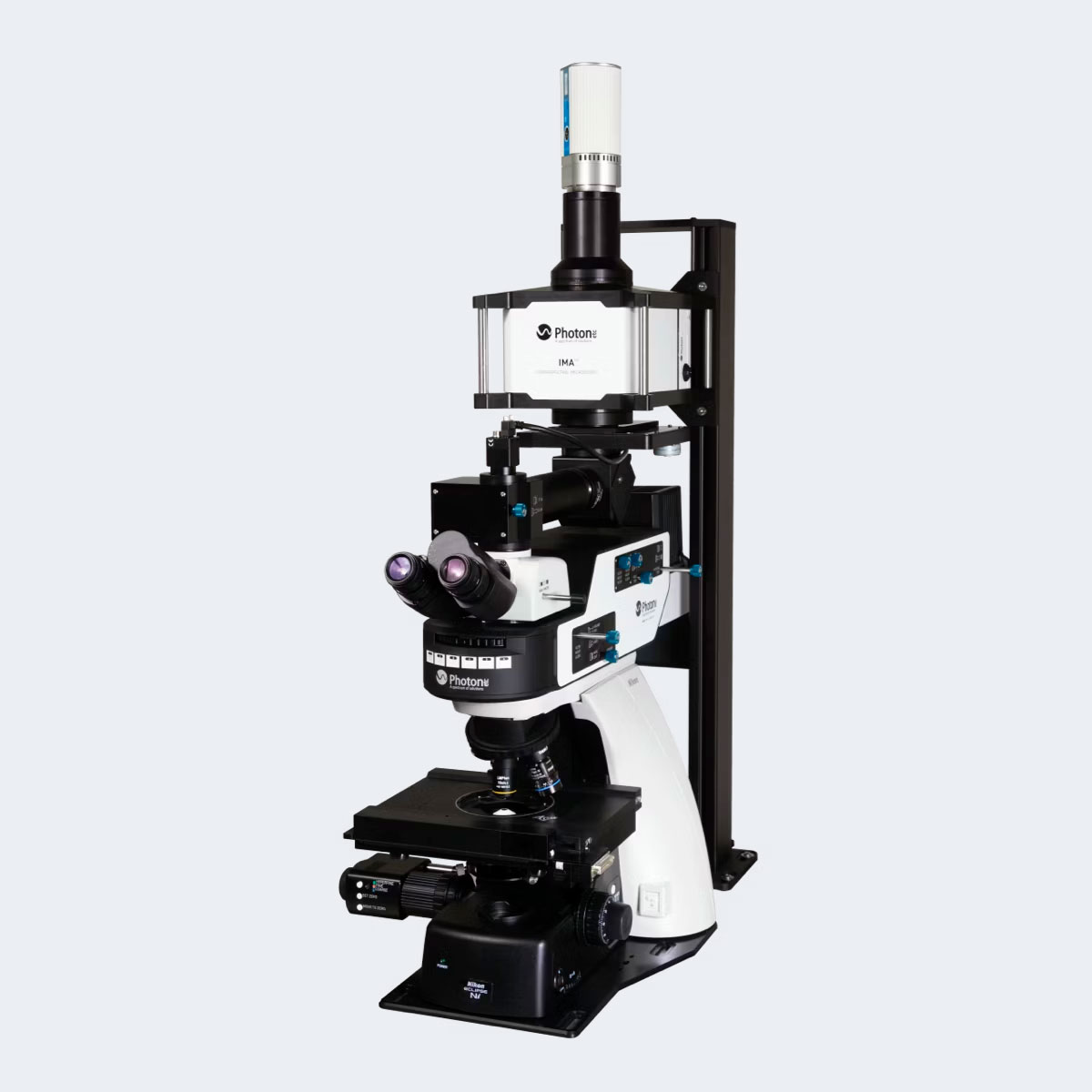
IMA™
IMA est une plateforme de microscopie hyperspectrale qui fournit de l’information spatiale et spectrale dans...