






Photon etc’s technology and applications in action
Explore how Photon etc.’s technologies are transforming research and industry. From global hyperspectral imaging to advanced Bragg grating-based filtering and in vivo characterization, these solutions provide precise, actionable data for cutting-edge applications.
Photon etc.
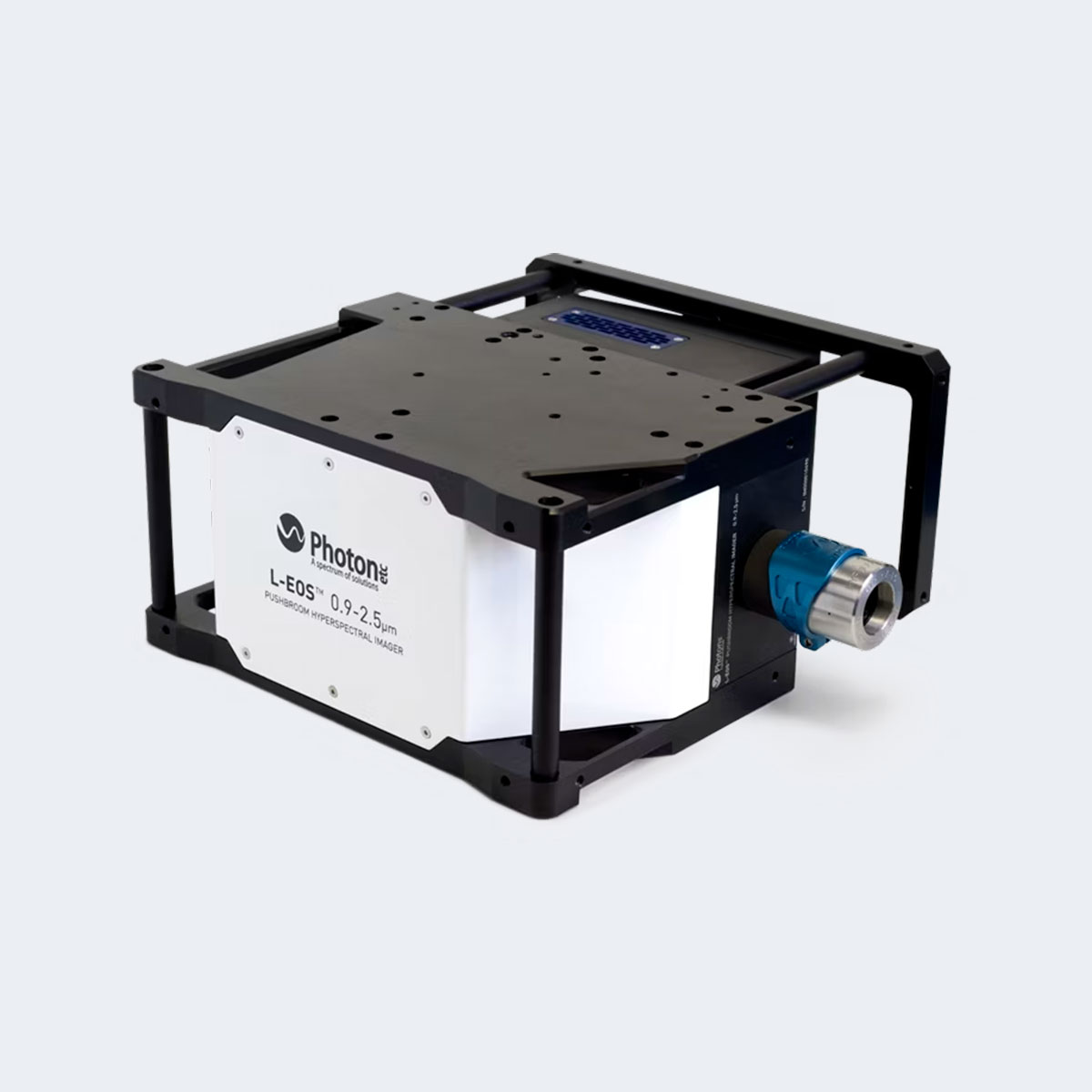
Photon etc. designs and builds state-of-the-art optical analysis solutions mainly based on a unique hyperspectral imaging patented technology. Its products are divided in four families: hyperspectral microscopic systems, hyperspectral widefield imagers, tunable filters and laser and infrared cameras.
The applications go from live cell imaging to solar cells and include nanotechnology development and industrial sorting. In addition to those systems, the innovative team of Photon etc. is always ready to create custom solutions adapted to the specific needs of its clients.
When Art, Science and Technology Work Hand in Hand
Photon etc. presents this short film shot in collaboration with Dr. Daniel Heller, researcher at the Memorial Sloan Kettering Cancer Center and Joseph Cohen, multidisciplinary artist. This short video documents how three experts in their respective fields benefit from and are enhanced by their mutual collaboration. Joseph creates new paint mixtures and textures using carbon nanotubes (CNT). Dr. Heller develops infrared probes and biomarkers using CNT’s. Sébastien (CEO at Photon etc.) develops science grade infrared cameras that can detect fluorescent CNT’s excited by specific wavelengths.
Photon etc.’s Global Imaging Technology
This video shows the conceptual difference between hyperspectral global imaging and raster scan (line scan, pushbroom). With global imaging, only a few monochromatic images are required to obtain a hyperspectral cube of data (X-Y spatial, Z spectral). With raster scan technologies, a spectrum needs to be acquired on each point/line within the desired field of view.
ASU Core Facilities Equipment Showcase: Photon etc. Hyperspectral Microscope
From mapping compositions to identifying defects, discover below how ASU Core Research Facilities are leveraging our IMA for their research in solar cell characterization, nanomaterials, and semiconductor.
CLAIR and IRINA, a perfect combination for a sophisticated customization request
To fulfill a special order, our team created a unique system combining our ClaIR and IRina products. Our engineers made sure that the system uses the same laser source for both products
For any customization request, contact us at ventes@photonetc.com.
nCore | Engaged with the Future of Mining and Geology
The nCore is a fully automated multi-sensor scanning platform for continuous drill core scanning and handling. Built with our proprietary state-of-the-art hyperspectral imagers, the system can deliver its outstanding performance directly on-site, thanks to its containerized and mobile lab dual configuration options. Its unique 7 sensor combination provides the most comprehensive imaging tool set, delivering an extensive map of the mineralogy with unmatched precision.
In Vivo NIR-II Imaging: Contact-Free Monitoring Heartbeat & Respiratory Rate
High-speed imaging made available by the fast frame rates of InGaAs cameras allows for contact-free cardiography and respiratory rate measurements in both anesthetized and awake animals. Such contact-free measurements of awake mice obtained without the use of any restraining device could drastically change studies procedures in labs.
Real-Time Biodistribution and Pharmacokinetics of ICG in a Mouse Using NIR-II Fluorescence
Video of IR VIVO imaging experiment showing the biodistribution and pharmacokinetics of ICG in real time. IR VIVO is able to visualize NIR probes at high resolutions. From one single injection, it was possible to obtain measurements of heartbeats, respiration and intestinal contraction rates.
In Vivo NIR-II Imaging of Liver Metabolism, Hepatobiliary Elimination & Gastro-Intestinal Motility
With a simple tail-vein injection of ICG, we can study liver metabolism, measure hepatobiliary elimination and monitor gastrointestinal motility simultaneously in vivo and contact-free. Such a straightforward method to image the intestine could help research on metabolic diseases.
IMA - Hyperspectral Microscope
From solar cells to live cell imaging, this global hyperspectral microscope, IMA, rapidly provides spectrally and spatially resolved maps in the VIS, NIR and SWIR ranges. Hyperspectral fluorescence, photoluminescence, electroluminescence, reflectance and transmittance measurements can be obtained. Darkfield and brightfield modalities are available.
Photovoltaic Analysis Made Simple : PLQY and QFLS Mapping in Minutes
With the rise of new photovoltaic materials, relying on PLQY mapping alone is no longer enough to evaluate performance. Using data acquired by IMA hyperspectral microscope, our new software module lets you generate essential photovoltaic characterization maps: PLQY, QFLS, and Eg in just a few clicks for deeper, more accurate insights.
Whether you’re just getting started or deep into materials optimization, this tool is fast, reliable, and ready to plug into your solar research workflow.
ASU Core Facilities Equipment Showcase: Photon etc. Hyperspectral Microscope
From mapping compositions to identifying defects, discover below how ASU Core Research Facilities are leveraging our IMA for their research in solar cell characterization, nanomaterials, and semiconductor.
Hyperspectral Characterization of Next-Generation Solar Cells and LEDs
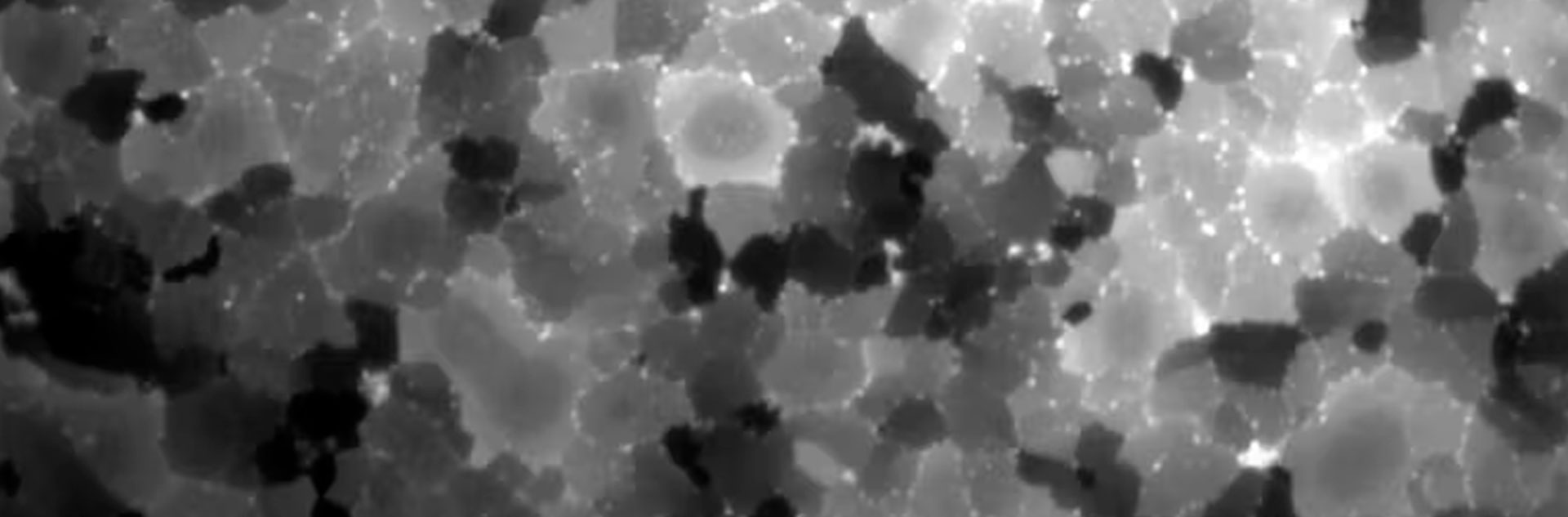
This video shows how spectrally and spatially resolved PL and EL maps can help identify defects, losses, and uniformity in advanced materials. A hyperspectral photoluminescence demonstration is performed on large grain perovskite crystals.
Photon etc.’s Global Imaging Technology
This video shows the conceptual difference between hyperspectral global imaging and raster scan (line scan, pushbroom). With global imaging, only a few monochromatic images are required to obtain a hyperspectral cube of data (X-Y spatial, Z spectral). With raster scan technologies, a spectrum needs to be acquired on each point/line within the desired field of view.
IMA - Hyperspectral Microscope
From solar cells to live cell imaging, this global hyperspectral microscope, IMA, rapidly provides spectrally and spatially resolved maps in the VIS, NIR and SWIR ranges. Hyperspectral fluorescence, photoluminescence, electroluminescence, reflectance and transmittance measurements can be obtained. Darkfield and brightfield modalities are available.
Introduction to the Laser Line Tunable Filter - LLTF
The LLTF combines a wide spectral tunability (400-2300 nm) with the highest out-of-band rejection (<-60 dB) available on the market. When coupled to a supercontinuum source, the LLTF is an ideal tool for spectroscopy, calibration and hyperspectral imaging.
Silicon Carbide Defect Characterization
This video shows how various types of defects in SiC can easily be detected using electroluminescence maps obtained with Photon etc’s hyperspectral imaging system, IMA. Offering spectrally resolved images, Photon etc’s hyperspectral imaging technology improves advanced material development capacities.
A day in the life of a core logging: Mineral Knowledge
From the conveyor, to the calibrations, to the results in wavelengths, the nCore provides the most comprehensive imaging tool set and delivering an extensive map of the mineralogy landscape with unmatched precision.
Discover how the nCore is used to scan a core logging!
Introduction to the Laser Line Tunable Filter - LLTF
The LLTF combines a wide spectral tunability (400-2300 nm) with the highest out-of-band rejection (<-60 dB) available on the market. When coupled to a supercontinuum source, the LLTF is an ideal tool for spectroscopy, calibration and hyperspectral imaging.