




- Photon etc.
- 5
- Products
- 5
- Preclinical
- 5
- Bioluminescence Imaging
- 5
- SynIRgy™
BIOLUMINESCENCE, NIR-II IMAGING
Combining High-Sensitivity Tumor Localization and High-Resolution Deep Tissue Tracking
A remarkable advancement in the preclinical field, the SynIRgy system combines bioluminescence, NIR-I and NIR-II imaging for the precise colocalization of tumors (bioluminescence), with the advantage of sharp, high resolution imaging (NIR-II). The NIR-II is a more consistent complementary modality to bioluminescence, able to collect ballistic photons from deeper in the tissue. The combination with NIR-I allows the use the larger list of already validated dyes in this range, before a possible transition to NIR-II. SynIRgy is the perfect combination of the power of NIR-II and the advantages of NIR-I.
Technology
A Growing Spectrum of Solutions


Engineered to accelerate discoveries across a diverse suite of advanced preclinical applications
Fluorescence Guided Surgery (FGS) & Resection
Achieves binary, unambiguous tumor delineation to drastically minimize the risk of missed malignant residues compared to NIR-I imaging.
Vascularization & Lymphatic Tracking
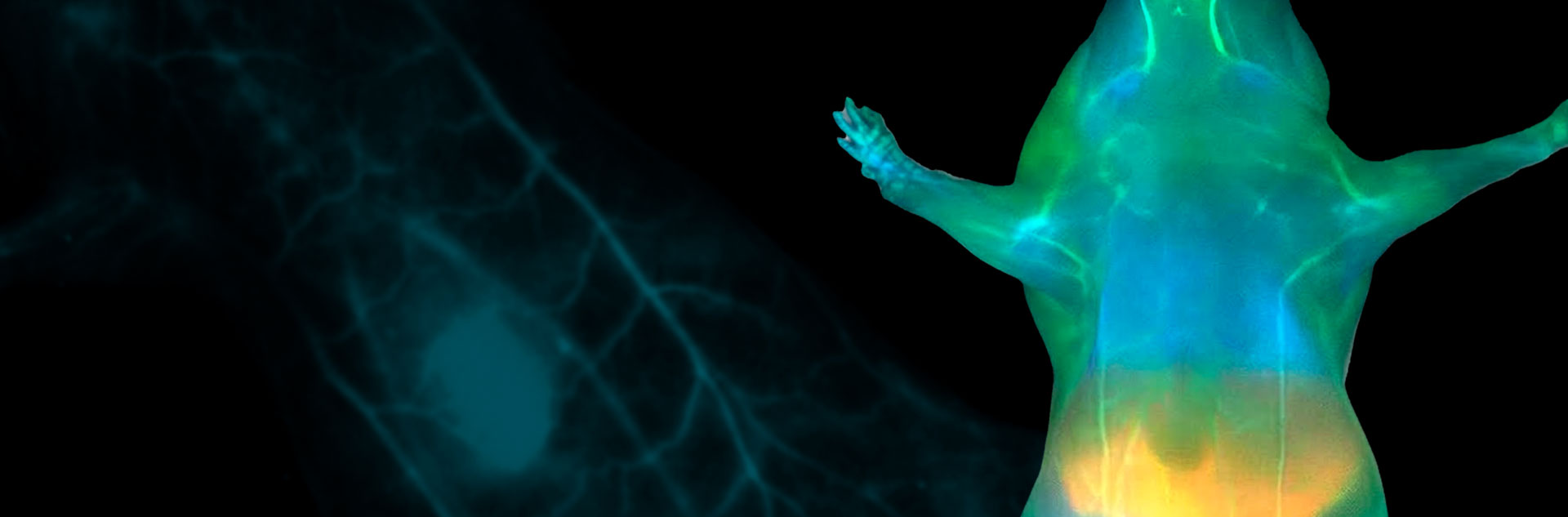
Maps microvascular structures, angiogenesis, lymph nodes, and real-time lymphatic drainage with crystal clarity.
Fluorescent Label Multiplexing
Simultaneously tracks distinct anatomical and molecular signals within the same model by isolating different emission bandwidths across the NIR-II window.
Multiplexing
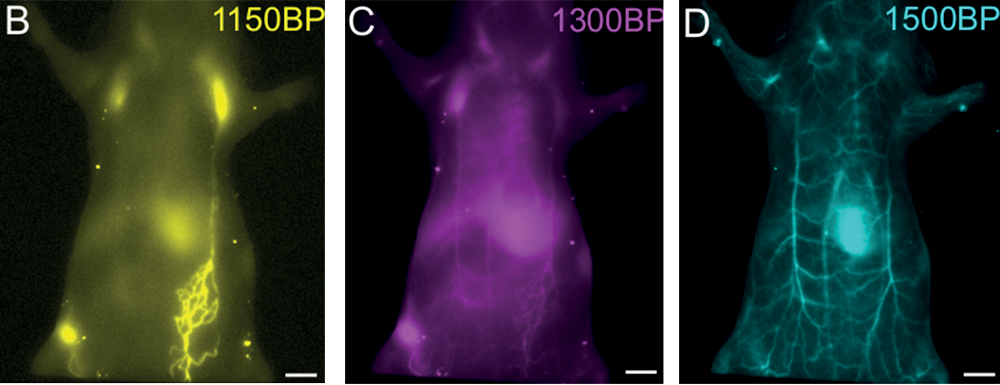
Reg : Zhong et al, Multiplexed Short-wave Infrared Imaging Highlights Anatomical Structures in Mice, bioRxiv
Multiplexing Capabilities
Lymphatic and Vascular Signals in the Same Mouse and Different Emission Bandwidths in the NIR-II Region.
Technical Specifications |
Visible camera |
NIR-II camera |
|---|---|---|
Technical SpecificationsEmission spectral range |
Visible camera400-1000 nm |
NIR-II camera900-1600 nm |
Technical SpecificationsImaging modes |
Visible cameraFluorescence, reflectance, overlay |
NIR-II cameraFluorescence, reflectance, overlay |
Technical SpecificationsEmission filters |
Visible cameraUp to 12 emission channels |
NIR-II cameraUp to 6 emission channels |
Technical SpecificationsIllumination source |
Visible cameraLasers at 465, 520, 670,760, 808, and 890 nmand adjustable power density |
NIR-II cameraLasers at 465, 520, 670,760, 808, and 890 nmand adjustable power density |
Technical SpecificationsLens |
Visible camera35 mm f/0,95 |
NIR-II camera50 mm f/1,4 |
Technical SpecificationsField of view |
Visible camera132 mm x 132 mm3 mice capacity |
NIR-II camera3 mice sequential view |
Technical SpecificationsStage |
Visible cameraStage Motorized XYZ |
NIR-II cameraStage Motorized XYZ |
Technical SpecificationsDimensions(L x W x H) |
Visible camera92 x 76 x 110 cm |
NIR-II camera92 x 76 x 110 cm |
Technical SpecificationsStage temperature |
Visible camera25 to 40°C |
NIR-II camera25 to 40°C |
Technical SpecificationsAnesthetic tubing and nosecone |
Visible cameraAnesthetic nosecone supplied |
NIR-II cameraAnesthetic nosecone supplied |
Technical SpecificationsSingle image data format |
Visible cameraHDF5, FITS, PNG, JPG, TIFF |
NIR-II cameraHDF5, FITS, PNG, JPG, TIFF |
Technical SpecificationsSoftware |
Visible cameraPC (Windows - 64-bits) with PHySpec™ control and analysis software(Computer included) |
NIR-II cameraPC (Windows - 64-bits) with PHySpec™ control and analysis software(Computer included) |
Technical SpecificationsPower requirement |
Visible camera120 VCA / 6,4 A / 50-60 Hz |
NIR-II camera230 VCA / 3,3 A / 50-60 Hz |
Technical SpecificationsType |
Visible cameraEMCCD or qCMOS |
NIR-II cameraInGaAs (Alizé™ 1.7) |
Technical SpecificationsFPA(Detector Array)
|
Visible camera512 x 512 pixels |
NIR-II camera640 x 512 pixels |
Technical SpecificationsCooling
|
Visible camera-80 °C |
NIR-II camera-60 °C |
Technical SpecificationsQuantum efficiency
|
Visible camera>90 % @ 600 nm, >70 % de 400 à 800 nm |
NIR-II camera>70 % de 900 à 1600 nm |
Technical SpecificationsSpectral probe(optionnal)
|
Visible cameraFor real-time acquisition of spectrum on single point of the animal |
NIR-II cameraFor real-time acquisition of spectrum on single point of the animal |
Technical SpecificationsAnesthesia system(optionnal)
|
Visible cameraAvailable on demand |
NIR-II cameraAvailable on demand |
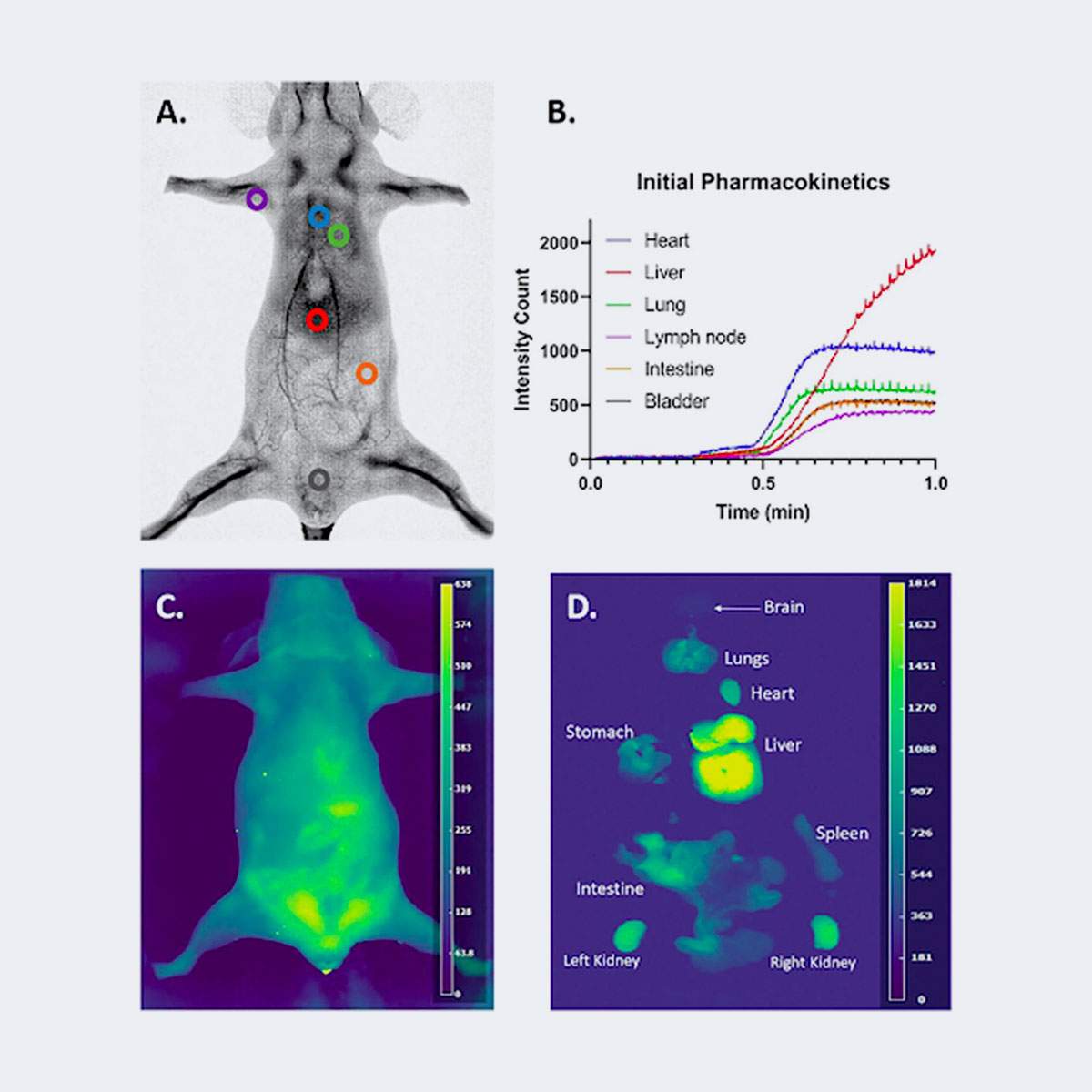
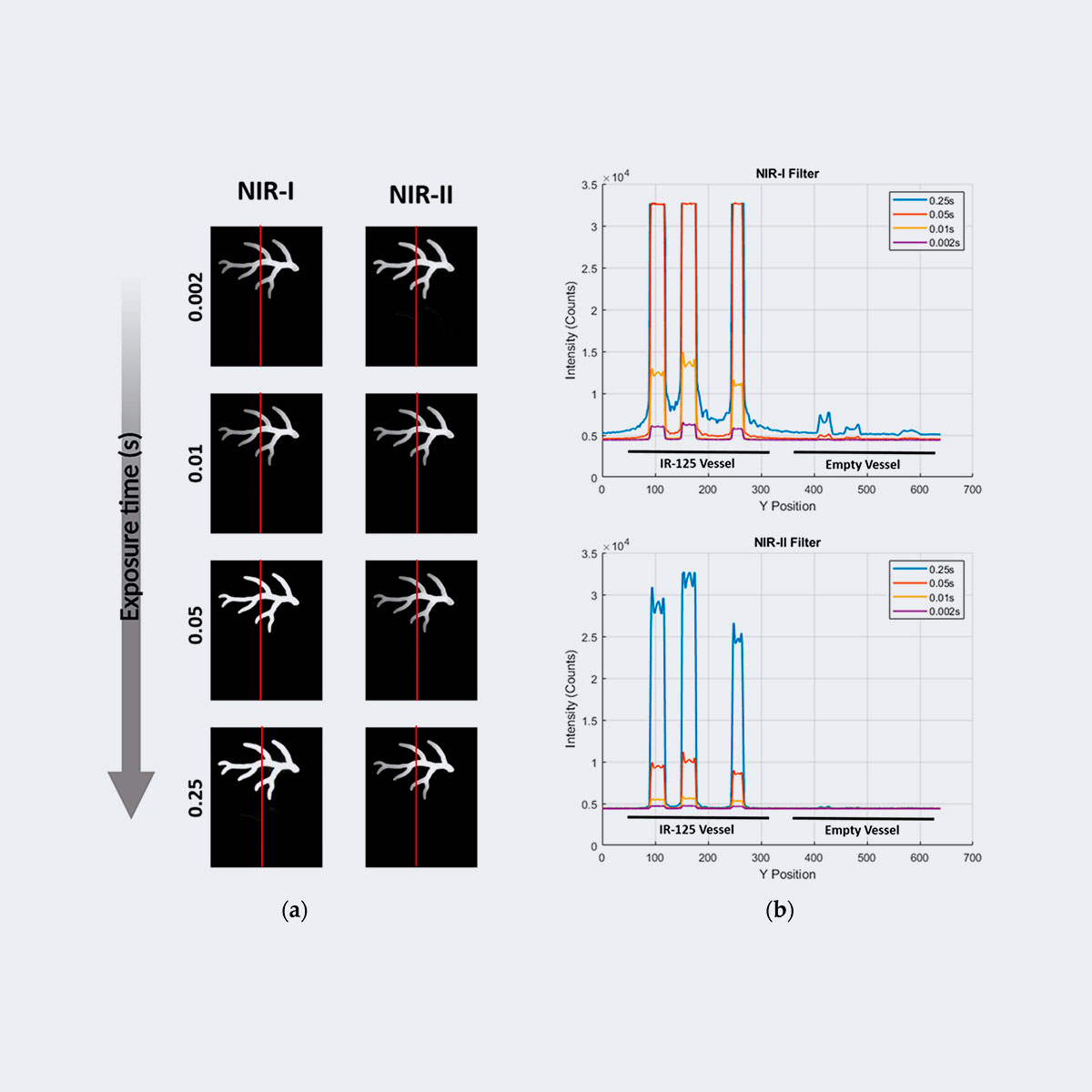
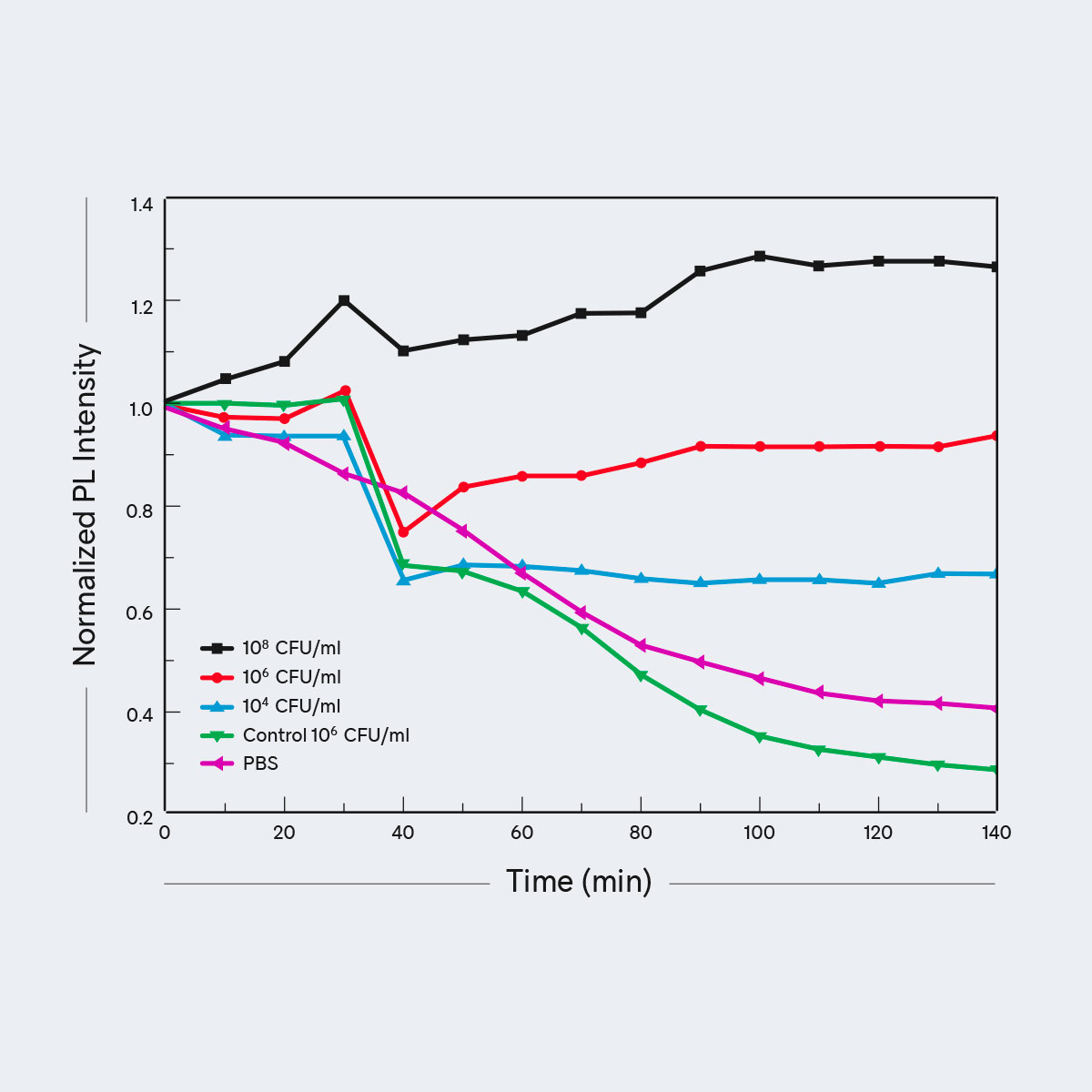
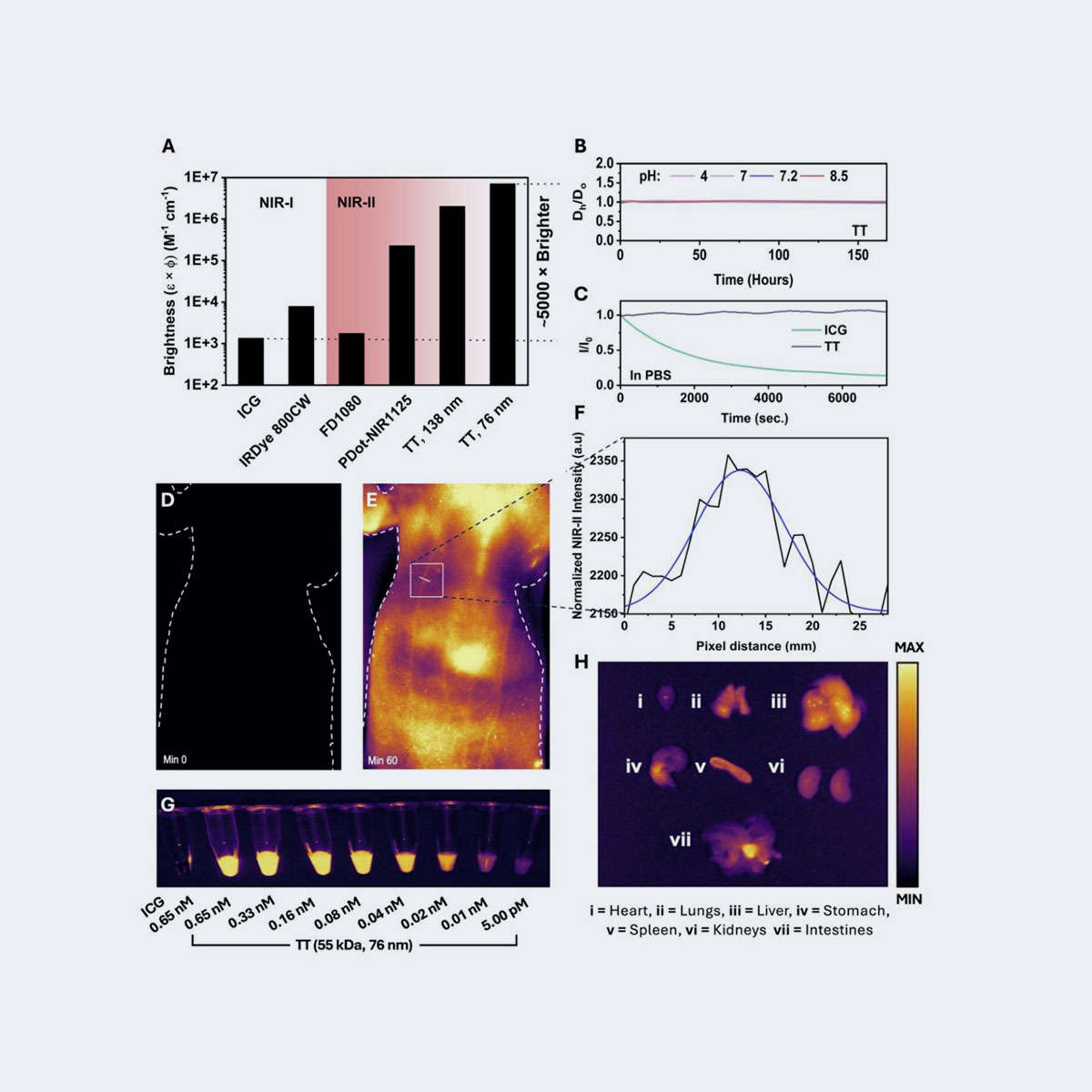

In Vivo NIR-II Imaging: Contact-Free Monitoring Heartbeat & Respiratory Rate
IR VIVO Guided Tour
Custom Products
Beyond our standard product lines, we bring to bear our know-how through collaborations with industry and researchers both local and international.
It’s in our DNA to build systems that measure up to the high standards set by our customers in science and industry.
Visit our Special Projects page or contact us if you can’t find what you’re looking for in our standard product lines.